Behind the scenes7 min read
Google Ads for new-build apartments in French-speaking Switzerland
Which Google Ads searches bring real buyers of new-build apartments, which ones waste budget, and how to structure one campaign per development.
 By Diego Penaloza Lopez ·
Contents
- What Google Ads does well for new-build property
- The searches to pay for, and the ones to exclude
- Structuring a Google Ads campaign per development
- Precise ads and a dedicated landing page
- Performance Max, only after a stable Search campaign
- Tracking enquiries through to reservation
- Google Ads and Meta: two complementary roles
- What to judge: cost per viewing and per reservation
- Key takeaways
- FAQ
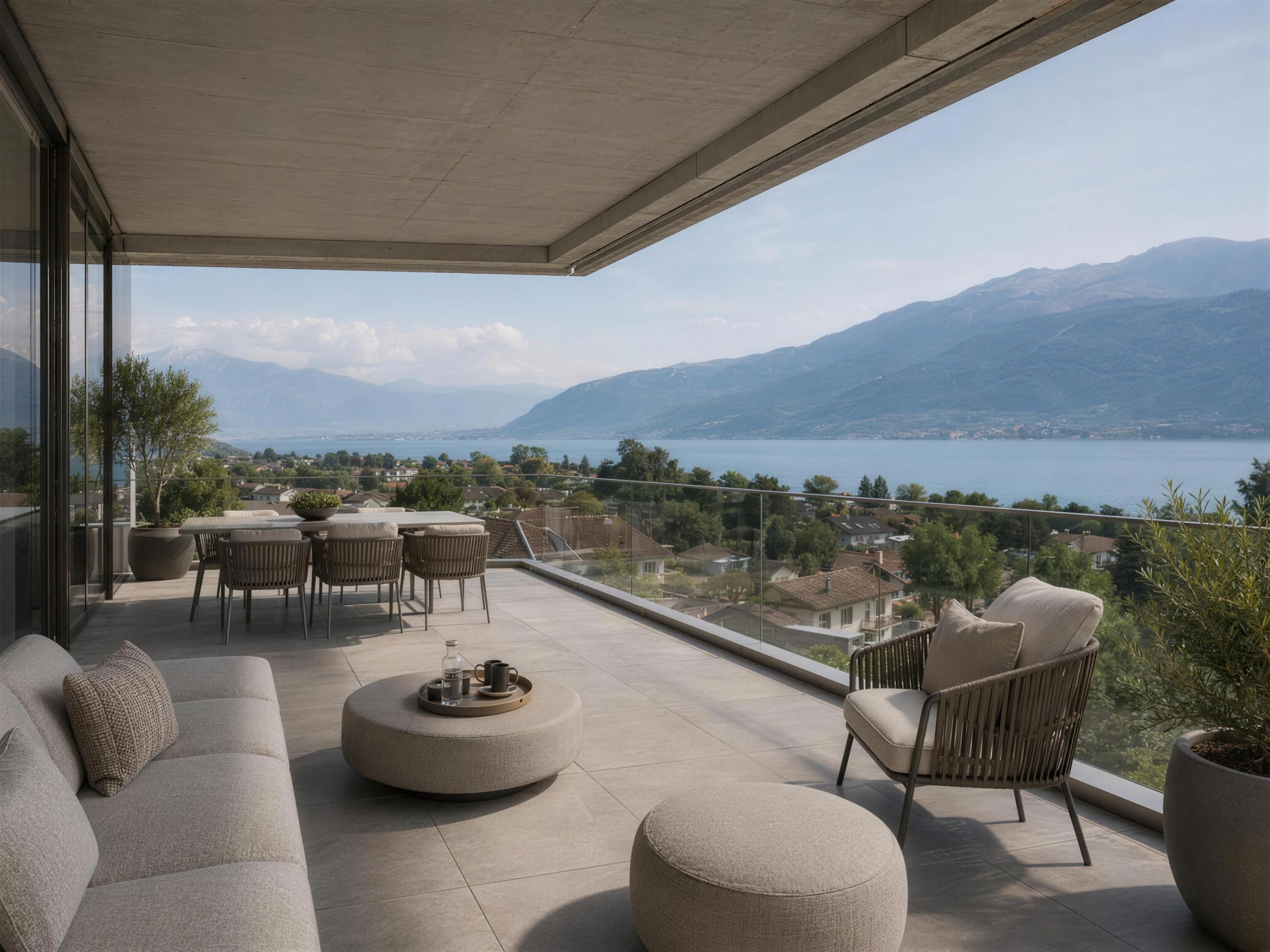
Someone who types “appartement neuf Colombier” (new apartment Colombier) into Google has already done half the work. They know what they want and where. Advertising on Google is not there to persuade them to buy; it is there to be the first answer they find. You still have to pay for those searches, and not for the others.
What Google Ads does well for new-build property
Google Ads sells ads placed above the search results. You pay per click, on chosen queries. Its strength is intent: the person has put their need into words themselves. Its limit is volume: for any given town, few people search for a new-build apartment each month. So Google does not fill a development on its own. It harvests what exists, often at a higher cost per enquiry than social media, but with buyers who are further along.
The searches to pay for, and the ones to exclude
The searches that convert
- “New apartment” + town. The product and the place, the two criteria the buyer has already settled.
- “PPE for sale” + town. The Swiss term for condominium ownership (PPE, “propriété par étages”) often signals a local buyer who knows the market.
- The development's name. The most qualified search: the person has already seen the development elsewhere, on a site hoarding, a portal or an ad.
- “Buy apartment off-plan”. A clear intention to buy, willing to wait for completion.
- Number of rooms + town. “4.5-room new build” + town: the buyer has already defined their need.
The searches that waste the budget
- Rentals. “Apartment to rent”, “new-build rental”: tenants, not buyers.
- Price per m². “Price m2 Neuchâtel” mostly attracts the curious, owners comparing and professionals.
- Valuations. “Value my apartment”: sellers, not buyers.
- Searches that are too broad. “Property”, “apartment” on its own or the name of a canton: many expensive clicks with no precise intent.
- Jobs and training. “Property developer jobs”, “become a broker”: nothing to do with buying.
The essential negative keywords
A negative keyword stops an ad from showing on a search that contains it. The list goes in before launch, not after the first invoice: rent, rental, letting, valuation, value, price m2, free, job, internship, training, broker, and the neighbouring towns the development does not serve (in French-speaking Switzerland, in their French forms too: location, louer, loyer, estimation). It is then extended every week by reading the search terms report, which shows the queries people actually typed.
Structuring a Google Ads campaign per development
- One campaign per development. Each development has its own budget, geographic area and landing page. You see what each one costs, with nothing mixed together.
- Ad groups by intent. A “development name” group, a “new apartment + town” group, a “PPE for sale” group, an “off-plan purchase” group. Each group has its own ads.
- The development's brand protected. The “development name” group runs permanently, even on a small budget. Otherwise a portal or a competitor can appear above your own development when a buyer searches for it.
- A realistic geographic area. The town, the neighbouring towns and the employment areas buyers come from, not the whole of Switzerland.
Scroll the table horizontally ↔
| Group | Example searches | Role |
|---|---|---|
| Development name | Exact name, name + town | Protect the brand, capture buyers who are already informed |
| New build + town | New apartment + town | Capture buyers who have chosen the location |
| PPE for sale | PPE for sale + town | Capture local buyers |
| Off-plan purchase | Buy apartment off-plan + region | Capture buyers ready to wait for completion |
Precise ads and a dedicated landing page
A good ad answers the search word for word. It repeats the town, the number of rooms available and the availability: “New 3.5- to 5.5-room apartments in [town], completion [season and year]”. Ad extensions (links to the floor plans, the brochure, the contact page) add space without costing more per click.
The click must lead to the development's page, not the developer's home page. A dedicated page shows the units available, floor plans, location, completion date and a single form, short and qualifying. That is where the step from click to enquiry is won or lost. See also our websites and landing pages.
Performance Max, only after a stable Search campaign
Performance Max is an automated campaign type: Google shows the ads across search, YouTube, Gmail and its display network, and decides for itself where to spend. The algorithm learns from the conversions it is given. Without reliable conversions, it optimises towards whatever is easy to get: forms filled in by mistake, cheap clicks on third-party sites.
So you start with campaigns on the search network (Search), where you control the queries. Performance Max only has a place afterwards, once enquiry tracking is reliable and Search is producing viewings consistently.
Tracking enquiries through to reservation
Google Ads sees the click and, with the right tracking, the submitted form. It does not see the viewing or the reservation, which happen at the sales office. They are passed back through offline conversion import: each enquiry keeps the Google click identifier, and when it becomes a viewing or a reservation in the CRM, that information is sent back to Google Ads. The campaign can then be judged, and optimised, on what matters. The principle is set out in tracking enquiries by channel.
Google Ads and Meta: two complementary roles
Meta builds awareness of the development: it shows the project to people who were not yet looking for it, in the right area and at the right stage of life. Some of them then search for the development's name on Google. That is where Google Ads captures the search. Switching off Meta therefore often reduces searches for the development's name; judging Google on its own overstates its share. The comparison between the two channels is covered in Google Ads or Meta Ads.
What to judge: cost per viewing and per reservation
Cost per click and click-through rate tell you whether the ads are relevant. They do not tell you whether the campaign sells. The two figures that matter are cost per viewing, tracked every week, and cost per reservation, which judges the campaign over time. A campaign with a high cost per enquiry that produces viewings is worth more than a cheap one that produces nothing but forms.
Key takeaways
- 01Google Ads captures buyers who are already searching: new build, town, development name.
- 02Negative keywords against rentals, valuations and price per m² go in before launch.
- 03One campaign per development, ad groups by intent and the development's brand always protected.
- 04The campaign is judged on cost per viewing and per reservation, imported from the CRM.
FAQ
Frequently asked questions
Rarely. Google captures people who are already searching, and there are few of them for any given town. It works better alongside a channel that makes the development known, such as Meta or site hoardings.
Yes, as a rule. These clicks are cheap and highly qualified, and without an ad a portal or a competitor can appear above your development.
After a stable Search campaign, once enquiries are tracked reliably and viewings or reservations flow back into Google Ads. Without these signals, the algorithm optimises towards low-quality conversions.
Share
