Behind the scenes8 min read
Meta Ads for a real estate development: finding condominium buyers
Targeting, forms, creatives, campaign sequence, bilingual markets: how to use Meta Ads to find condominium (PPE) buyers for a new-build development.
 By Diego Penaloza Lopez ·
Contents
- Why Meta Ads for a real estate development
- Target the region before the profile
- Instant form or dedicated page
- The questions that qualify
- Meta Ads creatives: one message per visual
- The sequence: launch, retargeting, reservation
- Speaking to both markets
- Measuring and judging a Meta Ads campaign
- Key takeaways
- FAQ
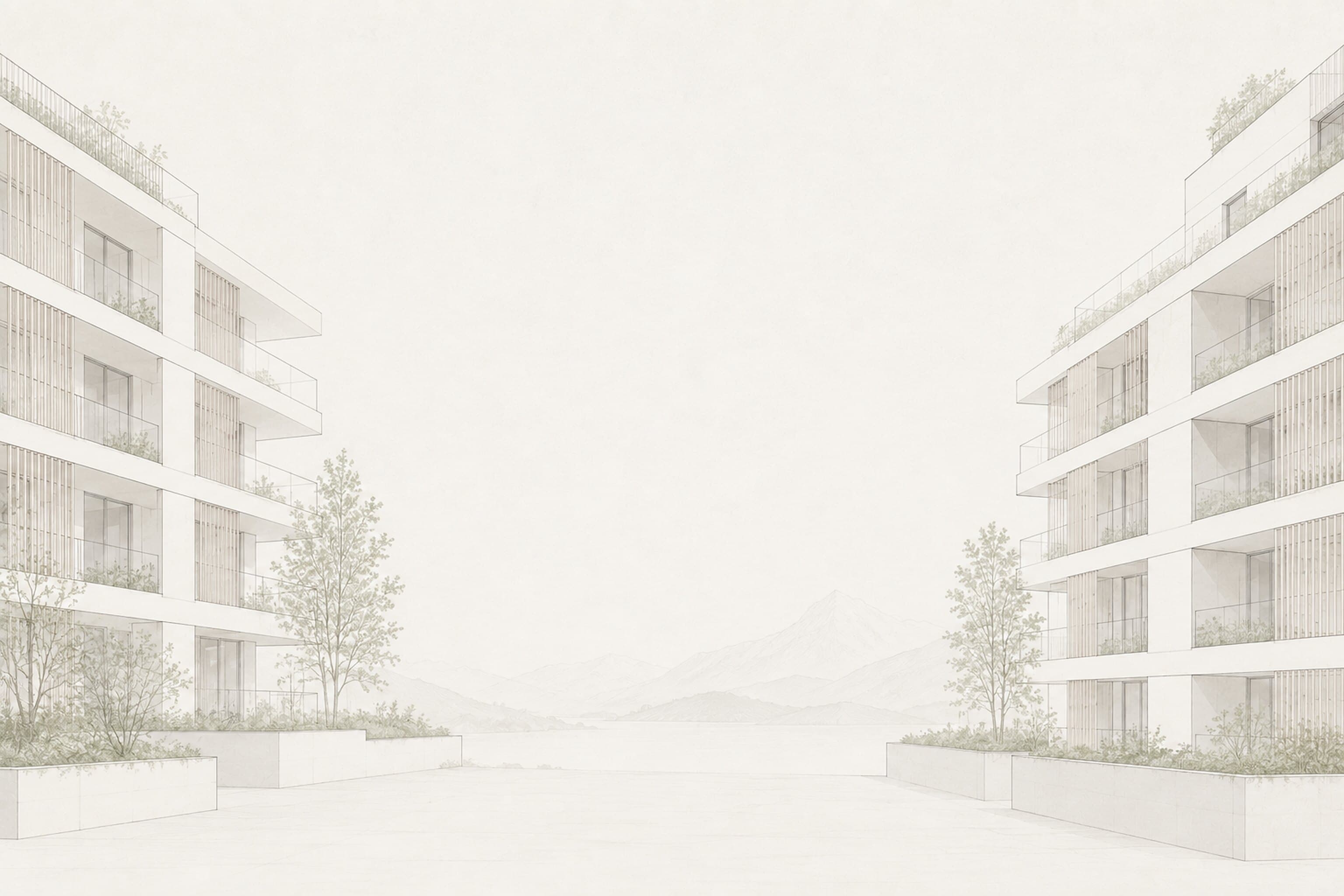
Most future buyers of a new apartment are not yet actively searching. They rent in the region, their family is growing, they are thinking about it without having opened a portal. Facebook and Instagram let you show them the development before they start looking. The enquiries still have to turn into viewings.
Why Meta Ads for a real estate development
Portals capture existing demand: people already searching, who compare your development with all the others. Meta Ads creates demand: it shows the development to people who live or work near the site and have not yet started looking. This is the audience that portals do not bring.
The format suits it. A new apartment sells on the image: the light, the view, the size of the living room, the terrace. An Instagram or Facebook feed shows exactly that, full screen, on the phone.
Target the region before the profile
The first setting is geographic: the development's municipality and a radius covering the catchment area, where the tenants who will want to stay in the region live. The second is the profile: young families, couples, people nearing retirement who want a smaller home, depending on the development.
Be cautious with profiles. Meta's detailed demographic criteria are fewer and fewer, and the algorithm often finds buyers better than you do, provided it receives the right signal (see measurement below). Broad targeting on the right area, with a creative that speaks clearly to the right audience, generally does better than a pile of interests.
Instant form or dedicated page
Meta offers instant forms: the person taps, the form opens inside the app, their details are pre-filled, two taps are enough. The cost per enquiry is very low. But some of these people do not remember asking for anything when they are called back.
A page dedicated to the development, with floor plans, unit types, indicative prices and a form, takes more effort. It produces fewer, more expensive enquiries, but the person has seen the product before leaving their name. For a purchase of several hundred thousand francs, that filter is what counts. See also the website or page for a development.
Scroll the table horizontally ↔
| Criterion | Instant form | Dedicated page |
|---|---|---|
| Effort required | Two taps, pre-filled fields | Reading the page, typing |
| Cost per enquiry | Low | Higher |
| Enquiry quality | Variable, many curious people | Higher: the product has been seen |
| What the person knows | Almost nothing about the development | Floor plans, unit types, indicative prices |
| Recommended use | Testing, waiting list before prices | Sales campaign, brochure request |
The questions that qualify
Whether you keep the instant form or the page, add two or three questions. They reduce volume slightly and save the sales team a great deal of time.
- The project. Main residence or investment.
- The unit type. Number of rooms wanted, to prepare the viewing.
- Financing. Already discussed with a bank, in progress, not yet.
- The timeline. Buying within six months, within the year, later.
With an instant form, Meta also lets you add a confirmation screen before submission. This extra step filters out some accidental taps. The answers must reach the CRM with the enquiry, not sit in an export downloaded once a week.
Meta Ads creatives: one message per visual
A visual that says everything says nothing. Each creative carries a single argument, and you make several to find out which one triggers viewings.
- The view and the light. A 3D render of the living room at the hour the sun comes in, or the real view from the floor, filmed by drone.
- The floor plan. A 4.5-room plan readable on a phone speaks directly to families counting bedrooms.
- The video. A short 3D walkthrough of the apartment, vertical format, without relying on music: many people watch with the sound off.
- The neighbourhood. The school, the station, the lake or the forest a few minutes away, for those who choose a place before a home.
- Progress. First reservations, start of construction: a verifiable fact, never false urgency.
The sequence: launch, retargeting, reservation
- Launch. Broad delivery across the region, several creatives, objective: page visits and brochure requests. You learn which messages work.
- Retargeting visitors. People who saw the page or watched the video without leaving their name see the development again, with a different argument: a floor plan, a unit type, an invitation to an open day.
- Reservation. People already in contact receive more direct messages: units still available, an appointment at the sales office. Budgets shift towards whatever produces viewings.
Retargeting visitors requires tracking to be in place on the page and visitors to have accepted the relevant cookies, in line with the nFADP (Swiss data protection act). Without this tracking, the second stage has no audience.
Speaking to both markets
For a development close to the language border, some buyers read German. A French-only campaign ignores them. You then need ads in German, a page in German and someone to answer in German, otherwise the enquiry is lost at the first call. Translating the ads without translating the page is not enough.
This is the set-up of Arboréa, a high-end development in a bilingual FR/DE market: a bilingual website and multichannel acquisition, with more than 50 brochure requests and 5 units reserved in the first month of campaigns.
Measuring and judging a Meta Ads campaign
Tracking rests on two elements. The pixel on the page, and the Conversions API, which sends events from the server and stays reliable when the browser blocks tracking. Then, sending back qualified enquiries: when a salesperson marks an enquiry as “viewing done” in the CRM, the information goes back to Meta, which learns to find profiles similar to those who view, not those who click.
To judge, look at cost per viewing, then cost per reservation. Cost per enquiry alone favours easy forms and the merely curious. The full method is set out in the acquisition cost of a condominium buyer.
Key takeaways
- 01Meta Ads shows a new-build development to buyers in the region before they search on the portals.
- 02A dedicated page with two or three qualifying questions gives enquiries that view.
- 03Each creative carries a single message, and the campaign runs in three stages: launch, retargeting, reservation.
- 04Judge on cost per viewing, sending qualified enquiries back to Meta through the Conversions API.
FAQ
Frequently asked questions
Rarely on its own. It creates demand in the region, but portals, Google and the developer's network remain useful. What matters is tracking the source of each enquiry to compare channels.
They suit testing a message or building a waiting list. For the sales campaign, a dedicated page with a qualifying form generally gives enquiries that go on to view more often.
It depends on Meta's “housing” special ad category, which bans these criteria where it applies. Check in Ads Manager at launch; broad geographic targeting remains the basis.
Share
