Behind the scenes5 min read
How to qualify leads with AI: what an SME can automate
Replying within minutes, sorting enquiries, following up without fail: what AI automates in lead qualification, and what must stay human.
 By Diego Penaloza Lopez ·
Contents
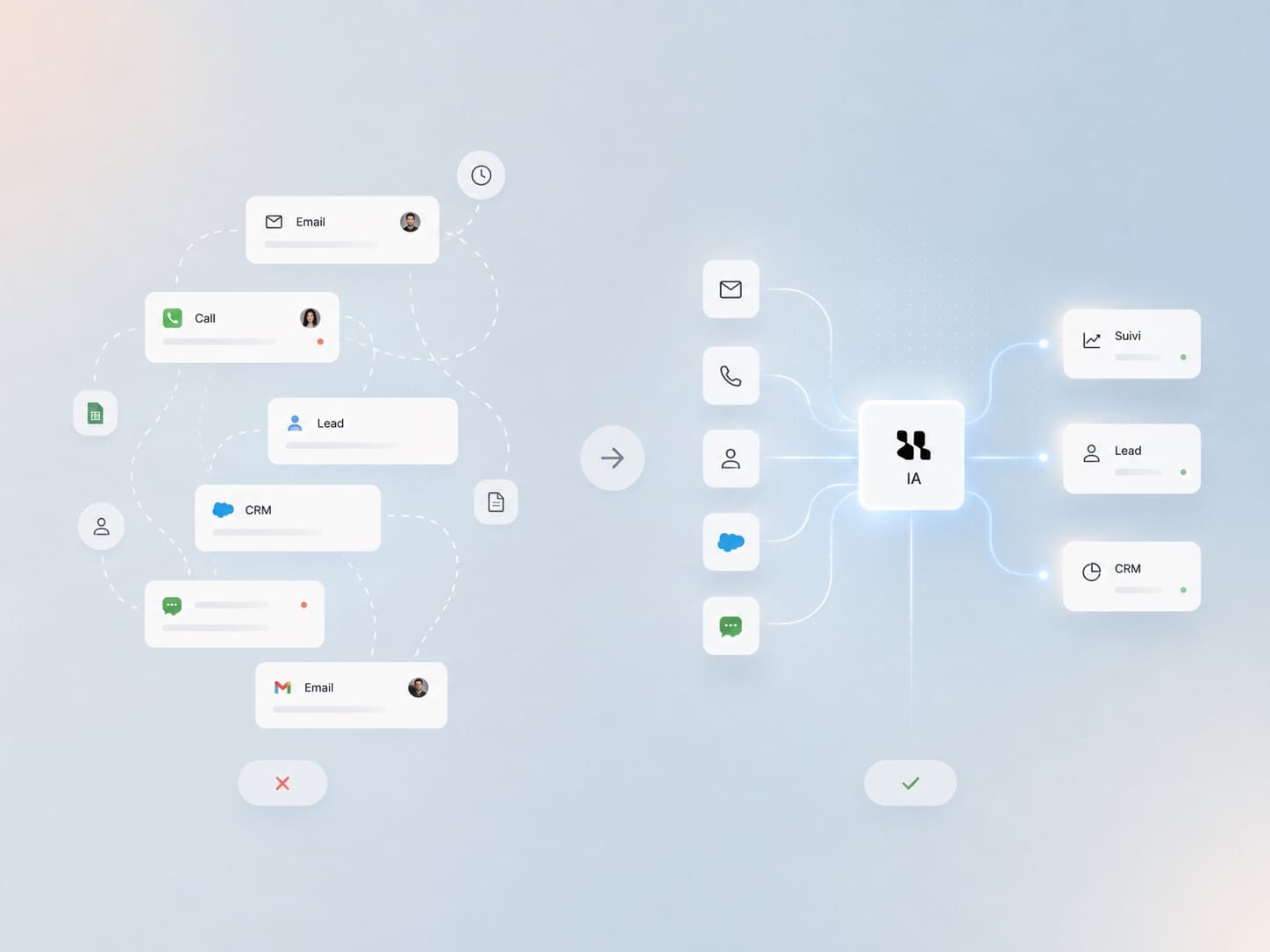
An SME pays to get enquiries, then loses some of them without noticing: a form that arrived on a Friday evening, an email buried in a shared inbox, a prospect called back three days later, after signing elsewhere. The problem is not acquisition. It is what happens in the hours that follow.
Why the way you qualify leads is an acquisition issue
Every lost enquiry has been paid for. If a campaign produces enquiries nobody handles in time, its cost per customer climbs, and the business concludes that advertising does not work. Improving how enquiries are handled is often the cheapest way to lower acquisition cost, before even touching the ads.
Qualifying means answering two questions for each enquiry: does this person have a real project, and who should handle it? As long as this sorting is done by hand, it depends on someone being available. That is where automation helps most.
What AI can automate
- The immediate reply. Every enquiry receives a personalised message within minutes, picking up on what the person asked and proposing the next step: a time slot, a document, a question.
- The sorting questions. By email, SMS or WhatsApp, the assistant asks the two or three questions that separate a project from curiosity: timing, budget, location, financing.
- CRM enrichment. The answers, the source of the enquiry and the history of exchanges are written into the record, with no re-keying.
- Scoring and assignment. Following rules written by the business, the enquiry is ranked (hot, to follow, off-target) and passed to the right salesperson or branch.
- Follow-ups. Someone who does not reply is followed up according to a defined sequence, then closed after the last attempt, instead of staying “to call back” forever.
- Feedback to the ad platforms. Qualified enquiries and sales are sent back to Meta and Google, which learn to find more people like them.
What must stay human
AI prepares; it does not sell. The first real conversation with a hot prospect, the viewing, the negotiation, the tailored quote remain the salesperson's job. A well-designed system saves them the time spent on data entry and sorting, so they spend it on the phone with the right people.
Special cases too: an unhappy existing client, a press request, a partner. A useful system recognises them and passes them straight to a person, without trying to answer.
“Our agents spend their time selling, not typing.”
Qualification criteria: write them before automating
An AI does not know what a good customer is for you. Before connecting anything, you need to write down, with the sales team, what distinguishes an enquiry to call back within the hour from one to follow later. These criteria come from the field: the latest signed sales, the enquiries that led nowhere, the questions salespeople already ask on the first call.
Each rule is then approved by the business before it is activated, and reviewed after a few weeks, once the first results show whether the sorting matches reality.
Data and the nFADP
Enquiries contain personal data. The Swiss Federal Act on Data Protection (nFADP, nLPD in French) requires people to be informed about how their data is processed, requires you to know where it is hosted, and limits collection to what is needed. In practice: a clear notice on the form, tools whose data location is known, and no sensitive data requested unless it is needed for qualification.
Where to start
- Follow a week of real enquiries: where they come from, who handles them, how quickly, how many go unanswered.
- Write your qualification criteria with the sales team, based on the latest sales.
- Automate the immediate reply and CRM entry first: it is the quickest gain.
- Then add sorting, assignment and follow-ups, rule by rule.
- Link every qualified enquiry to its source campaign to steer acquisition on sales, not on forms.
At Masini Groupe, this system (website, Meta acquisition, custom CRM with automatic qualification) took the agency from dependence on property portals to ten times more qualified enquiries in twelve months, with up to five hours saved per agent every week.
Key takeaways
- 01Being able to qualify leads quickly lowers acquisition cost without raising the ad budget.
- 02AI automates the reply, sorting, data entry, assignment and follow-ups.
- 03Qualification criteria come from real sales and are approved by the business.
- 04The sales call and special cases stay human.
FAQ
Frequently asked questions
Not necessarily. Automations connect to most common CRMs. A custom CRM is justified when existing tools do not follow the business's real sales process.
They should be able to: automated messages are signed as such, and the person can always ask to speak to someone. Transparency avoids disappointing a prospect on the first call.
An automation follows fixed rules: if this condition, then this action. An AI agent understands free text and adapts its reply. To qualify leads, the two are often combined: AI reads and replies, rules decide the ranking and assignment.
Share
